
The Coming of Faith-Based Housing Initiatives in the Midwest
by thomas dietz
images by: erik bootsma, architect
Recent years have seen the emergence of a variety of faith-based housing development initiatives promoted by varied professional associations, religious entities, and public-private partnerships.  One example of this trend is Southern Urbanism’s Faith-Based Housing Initiative (FBHI), a 501(c)(3) organization that describes itself as connecting “design and development professionals with faith leaders to explore the process of transforming church properties into housing.”

Aaron Lubeck, founder of Southern Urbanism, originally conceived the FBHI and reached out to Sara Joy Proppe following a presentation she gave at a recent CNU Congress on her consulting work.  Ralph Plaskett also joined the initiative, and the three subsequently became the business development team of the FBHI.

Projects developed in accordance with the FBHI are now gaining traction in the Midwest as well, with a recent proof-of-concept proposed Detroit, Michigan.

Richmond, Virginia-based architect Erik Bootsma has been interested in faith-based housing since he first worked on a similarly conceived project at Saint John’s parish in McLean, Virginia for Milton Grenfell of Grenfell Architecture in 2007.  Potential clients have approached him about urban housing projects ever since, and he believes the movement is gaining traction.

In 2021 Bootsma was asked by Daniel Egan to develop eight urban blocks near the heart of Detroit, Michigan; and, as an early proof-of-concept for the FBHI, Lubeck further promoted and publicized the project. Lubeck, as the Editor of the Southern Urbanism Substack, had already been engaged in efforts to broaden accessibility to faith-based housing by right, and now wanted a practical design proposal as an exemplary model. In this instance, the design proposal is conceived as housing for parishioners in the form of an urban village centered around a terraced park adjacent to the existing Saint Aubin Church. 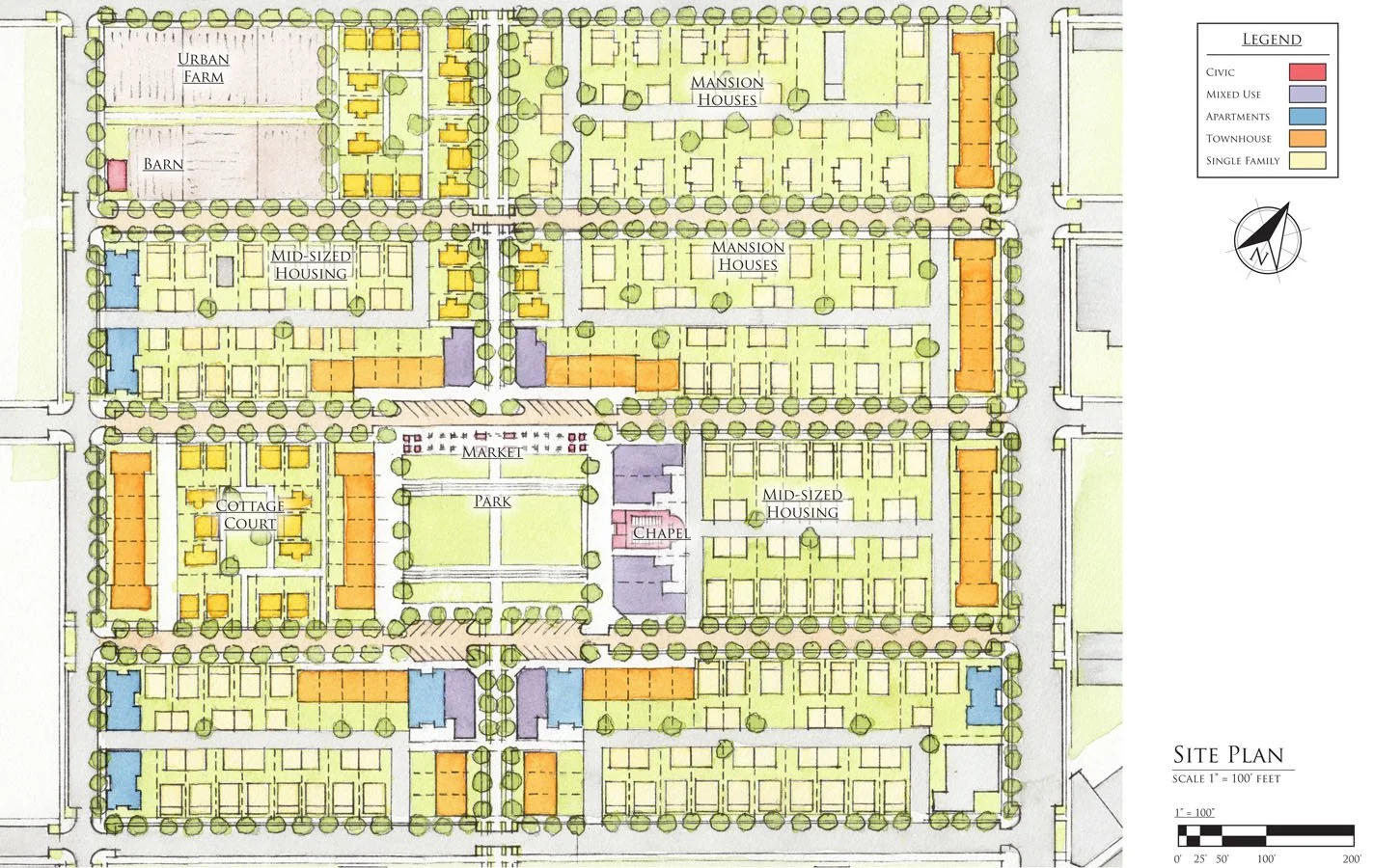
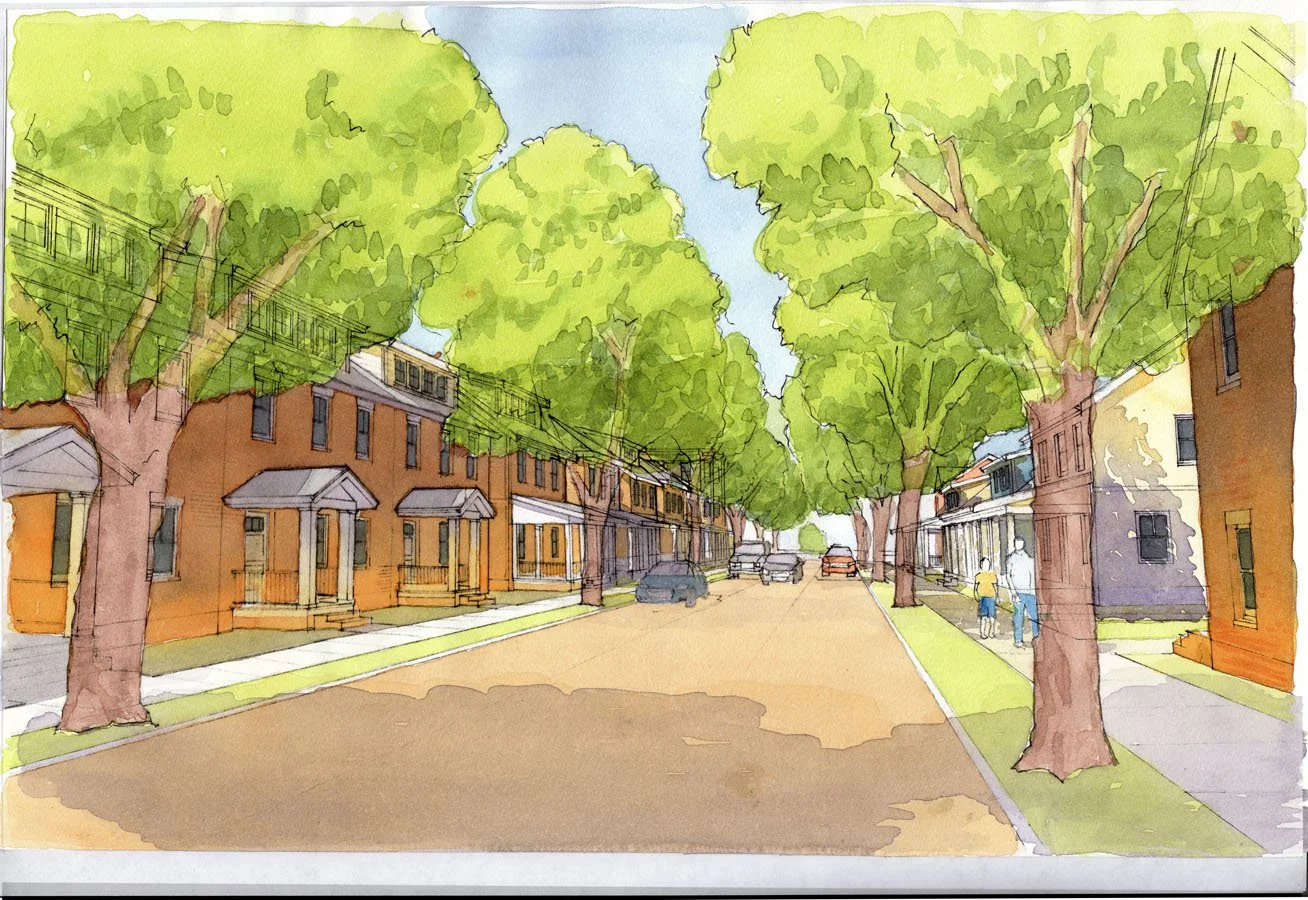
Bootsma’s design creates a new epicenter for Catholics from throughout the Detroit metro area and the proposal itself is guided by New Urbanist design principles.  The park is intended to anchor the community, providing a venue for outdoor skating, concerts, and festivals.  Alongside a mix of commercial and small offices spaces, the plan calls for the development of large single-family homes and cottages, as well as live/work housing and apartment units.  This diversity of available housing and commerce provides a built environment appropriate to parishioners in every stage of life.   The development also intentionally imagines social interaction occurring in ‘third spaces’ conceived as deeper and more meaningful than the specialized commercial functions often proposed for such projects.

As a proof-of-concept for the FBHI, this proposal specifically sought to understand the unique difficulties confronting projects of this nature, the most obvious being the municipal approvals process for a religiously defined development. Unfortunately, much of that exploration remains unanswered. In this instance, the city had another intent for the land, using it instead for the ongoing Eastern Market housing project. 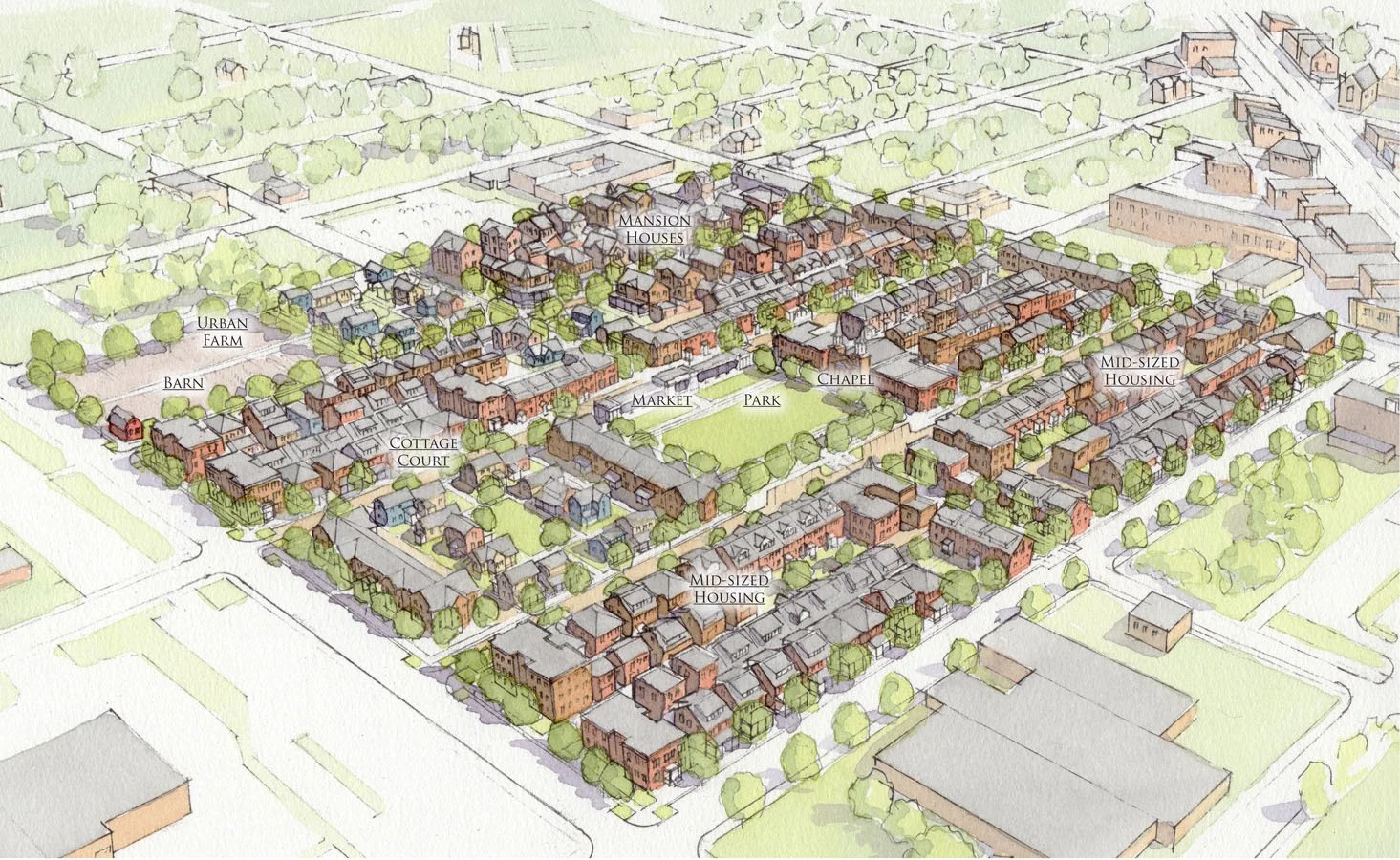
As it pertains to strictly architectural matters, Boostma notes that the individual home designs for this plan remain outside the purview of his current proposal; however, the project presents the possibility of applying varied models seen elsewhere within a faith-based context:

•	from an HOA with review by a town architect
•	to written architectural standards
•	to a controlled master plan with pre-approved kit houses

While architectural concerns are significant, what is more difficult for projects of this type is defining the actual financing model for the development, particularly when the proposal is conceived as following an incremental model. 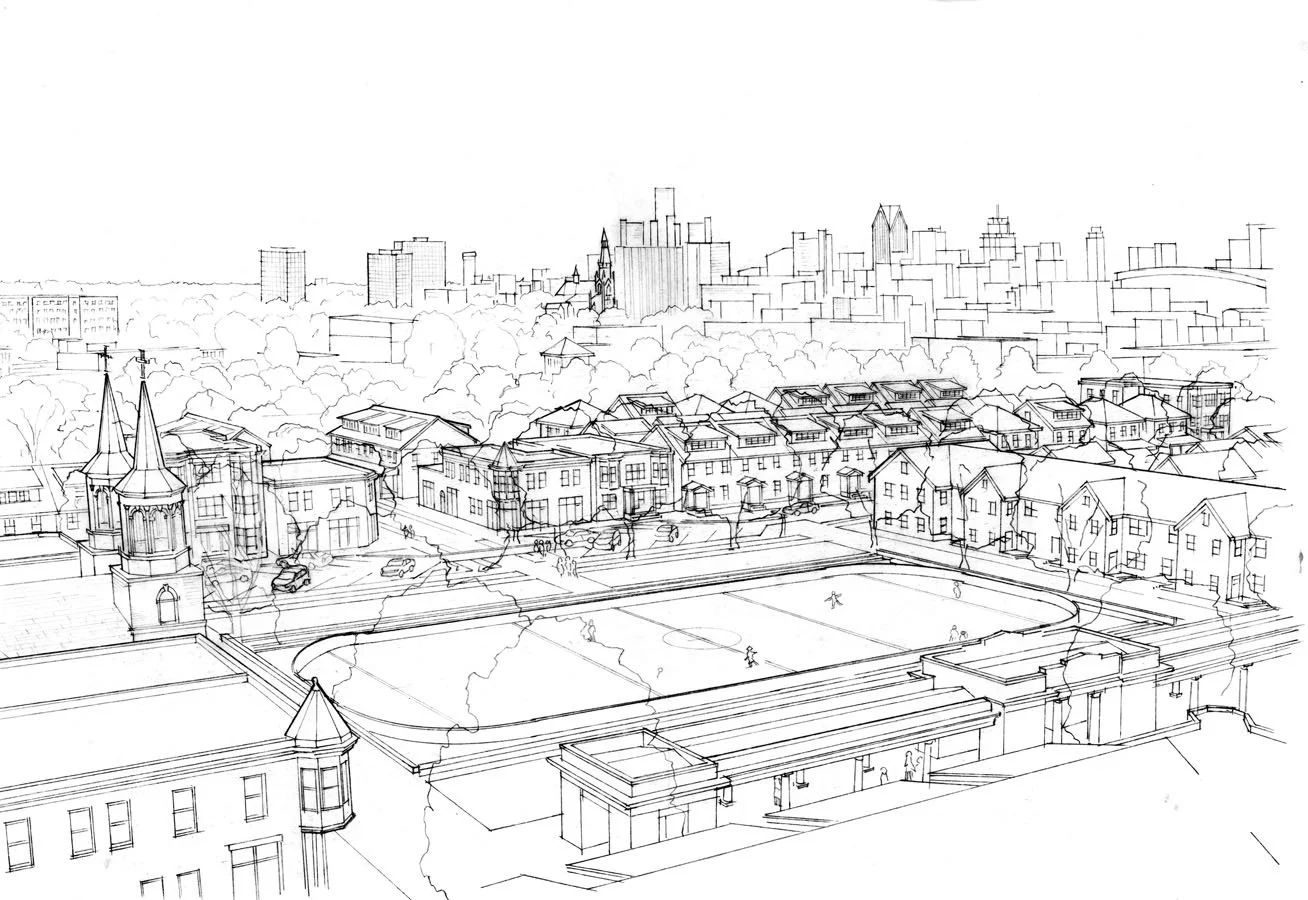
There are also demographic questions to be answered.  What does it mean to be a faith-based community, and how does one legally negotiate the development and sale of property under this model?  While ethnic and religious neighborhoods were once quite commonplace in North American cities, developing a new one intentionally presents real legal challenges.

Bootsma contends it is important to put faith in practice in urban planning and design, and cited the Veritatis Splendor community in Texas, noting the disconnect between the values espoused by that community and its physical manifestation. Those behind the FBHI are deeply committed to creating community environments that match theological principles, noting Bootsma’s personal belief that uncovering how a good community works requires understanding how a Christian community works. 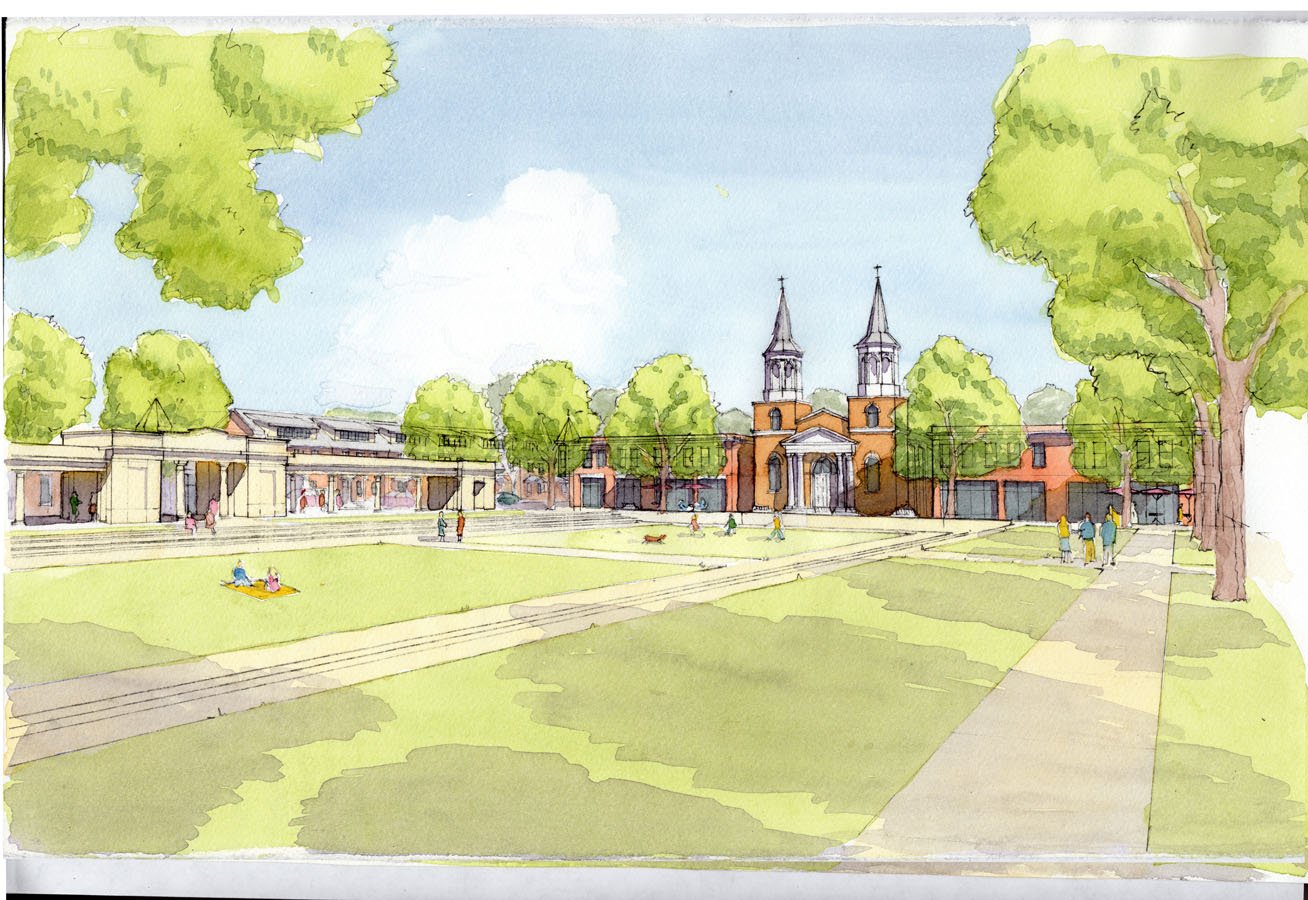
Meanwhile, Sara Joy Proppe – as Director of the Proximity Project – is also continuing her work in the field of real estate consulting, specifically assisting churches to identify how their properties can physically integrate into urban communities in meaningful ways.  Proppe’s work centers on feasibility studies, focusing on identifying and aligning institutional mission with potential placemaking and development strategies, connecting faith-based communities to developers and other interested third-parties.  Proppe notes many churches require technical assistance from devoted professionals, particularly as it pertains to the development of missing middle housing.  Of consequence, Proppe believes walkups and cottage courts fit missionally with churches, and the scale is particularly appropriate for urban properties.

Proppe is directly associated with FBHI’s four-part cohort programing, featuring a Speaker Symposium and Design & Development Workshops with a concluding Film Night. The FBHI is looking for fiscal sponsors to help fund the initiative for a given region and imagine fiscal sponsorship could come from a synod or presbytery, a university, a private foundation, or a city/regional public agency. The target audience for the cohort are churches with excess land and are considering housing developments.

As for CNU Midwest proper, similarly conceived projects have existed in Chicago for decades.  Of consequence, on her Embedded Church Podcast, Proppe spoke with Pastor Jonathon Brooks.  Using similar principles, Pastor Brooks is now a Board Member of Chicago’s Lawndale Christian Development Corporation, an organization that has already developed over 500 affordable housing units since its inception in 1975 under Wayne Gordon.

While the concept of faith-based housing has been present for years in the Midwest, new initiatives like the FBHI seek to more closely identify such projects with the design and planning strategies of the New Urbanist movement.
Author bio:
Thomas M. Dietz is a CNU-Accredited practicing architect in Chicago with JNKA Architects.