

Greater Ohio Policy Center Report Identifies Regulatory Avenue for Reducing ADU Sewer Costs in Columbus, OH
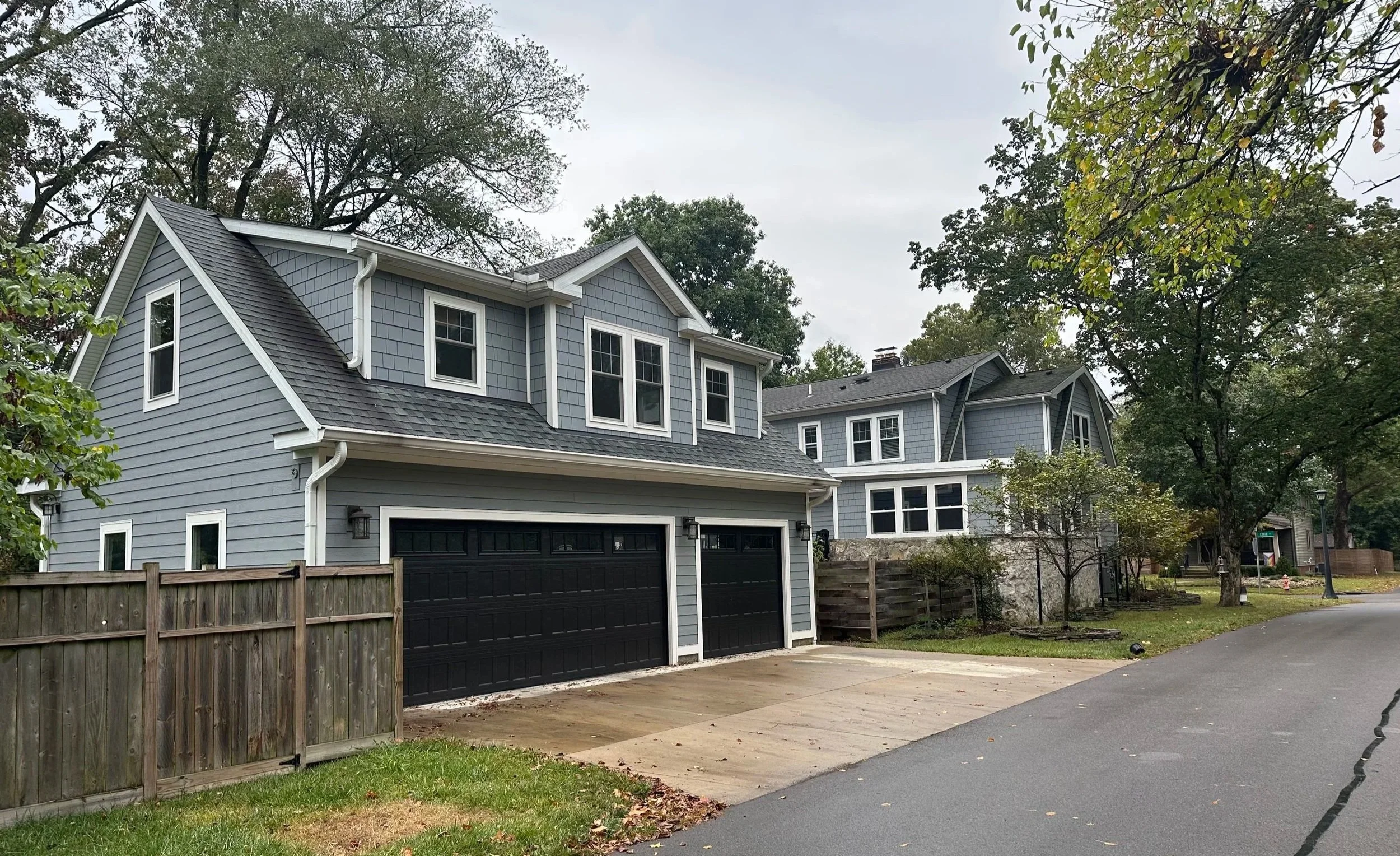
Source: Greater ohio policy center
by erica spaid patras
June 2026
With support from the Columbus Foundation, Greater Ohio Policy Center (GOPC) investigated sewer and water requirements for Accessory Dwelling Units (ADUs) in Columbus and peer cities nationwide to identify best practices to reduce the cost of ADU construction in Columbus. GOPC explored requirements in Columbus, OH; Austin, TX; Ann Arbor, MI; Portland, OR; and Boston, MA. Findings from this investigation and a video summary can be found here.GOPC determined that the primary sewer configuration used in peer cities to allow ADUs is not permitted in Columbus, and that the inability to use the alternative configuration is likely to increase sewer costs associated with ADUs in Columbus.Peer City Sewer Configuration
The sewer configuration commonly used in peer cities is shown in Figure 1. In this configuration, the sewer of the ADU taps directly into the sanitary stack of the primary dwelling unit, connecting the ADU’s sewer to that of the primary dwelling unit. Respondents from peer cities report no issues with this configuration's functionality.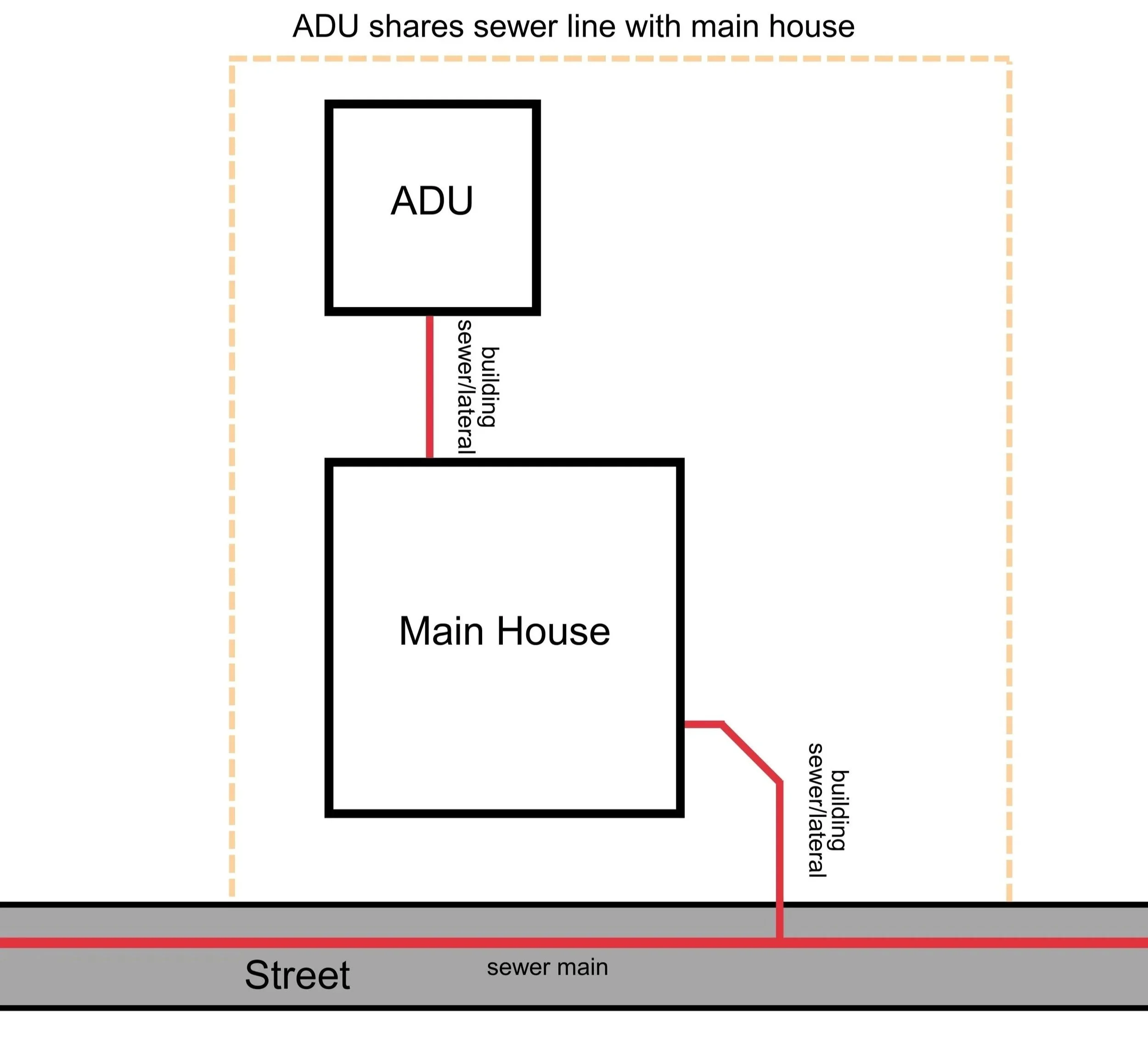
Source: Greater Ohio Policy Center
Figure 1: Peer City ADU Sewer Configuration
This configuration is currently not permitted in Columbus due to three specific pieces of code cited from Columbus City code and Ohio’s Plumbing code. More discussion of each of these codes can be found in Investigation of ADU Sewer Requirements in Columbus, OH.Columbus’ Permitted Sewer Configurations
The sewer configurations that Columbus does allow require that the ADU either have its own sewer lateral or that the main house and the ADU share a common service lateral. They do not allow a direct connection from the ADU sewer to the main house's sewer. The allowable configurations for a lot where the main sewer line runs in the street in front of the house are shown in Figures 2 & 3. The configuration for alley-fed lots is similar, and more discussion of these can be found in the report.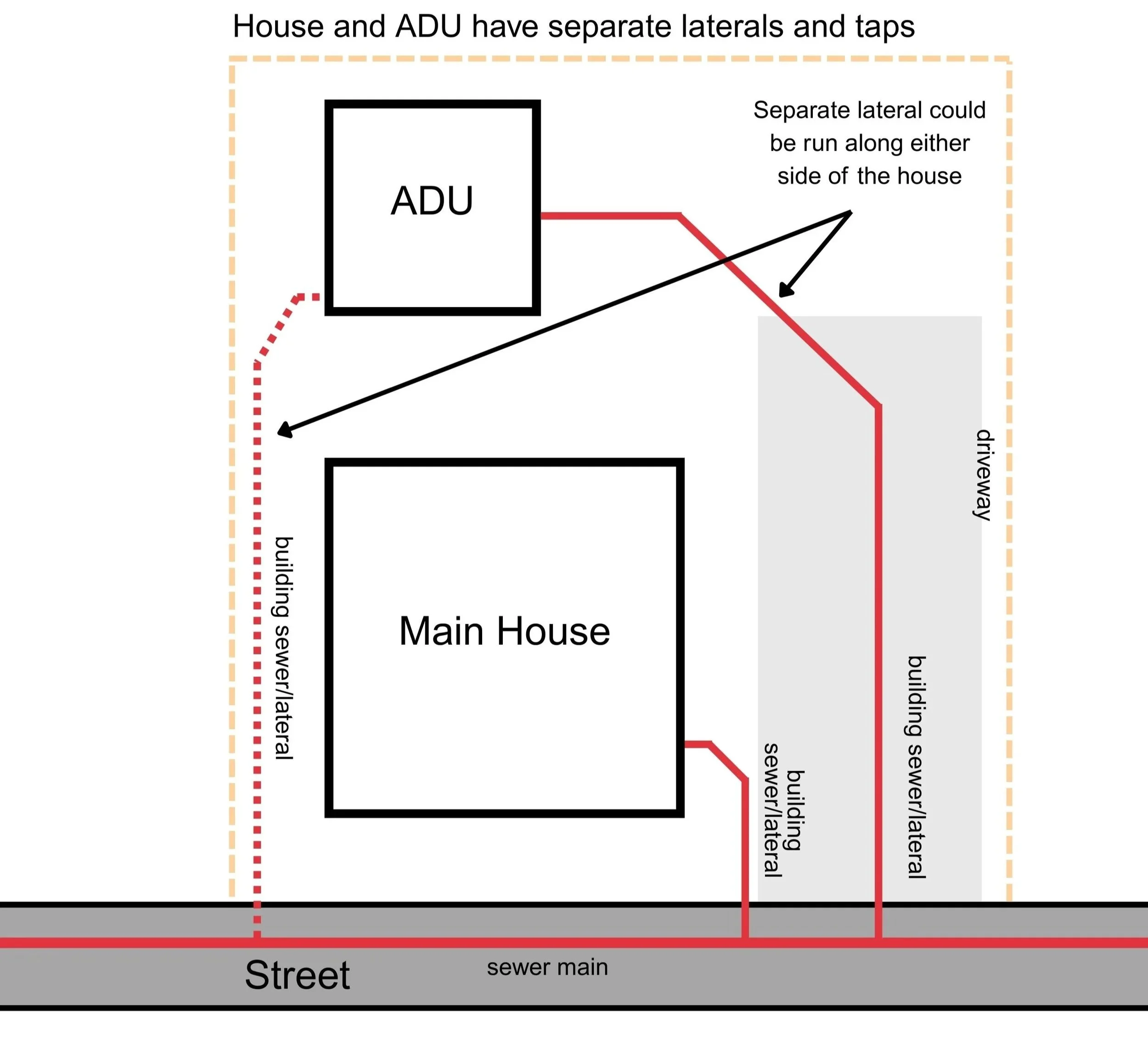
Source: greater ohio policy center
Figure 2: One allowable ADU sewer configuration in ColumbuS
In the first scenario, the ADU and the primary dwelling unit each have separate sewer laterals and separate sewer taps at the main sewer line in the street. This is typically the most expensive option because of the cost of running a new sewer lateral the full length of the yard and paying for sewer capacity fees. Some lots may have space for the ADU sewer lateral to run along a side yard, avoiding the driveway. It is common, though, especially if the ADU will be above a garage, that the driveway will need to be removed to run the ADU’s sewer lateral and then replaced, adding a high additional cost to the project.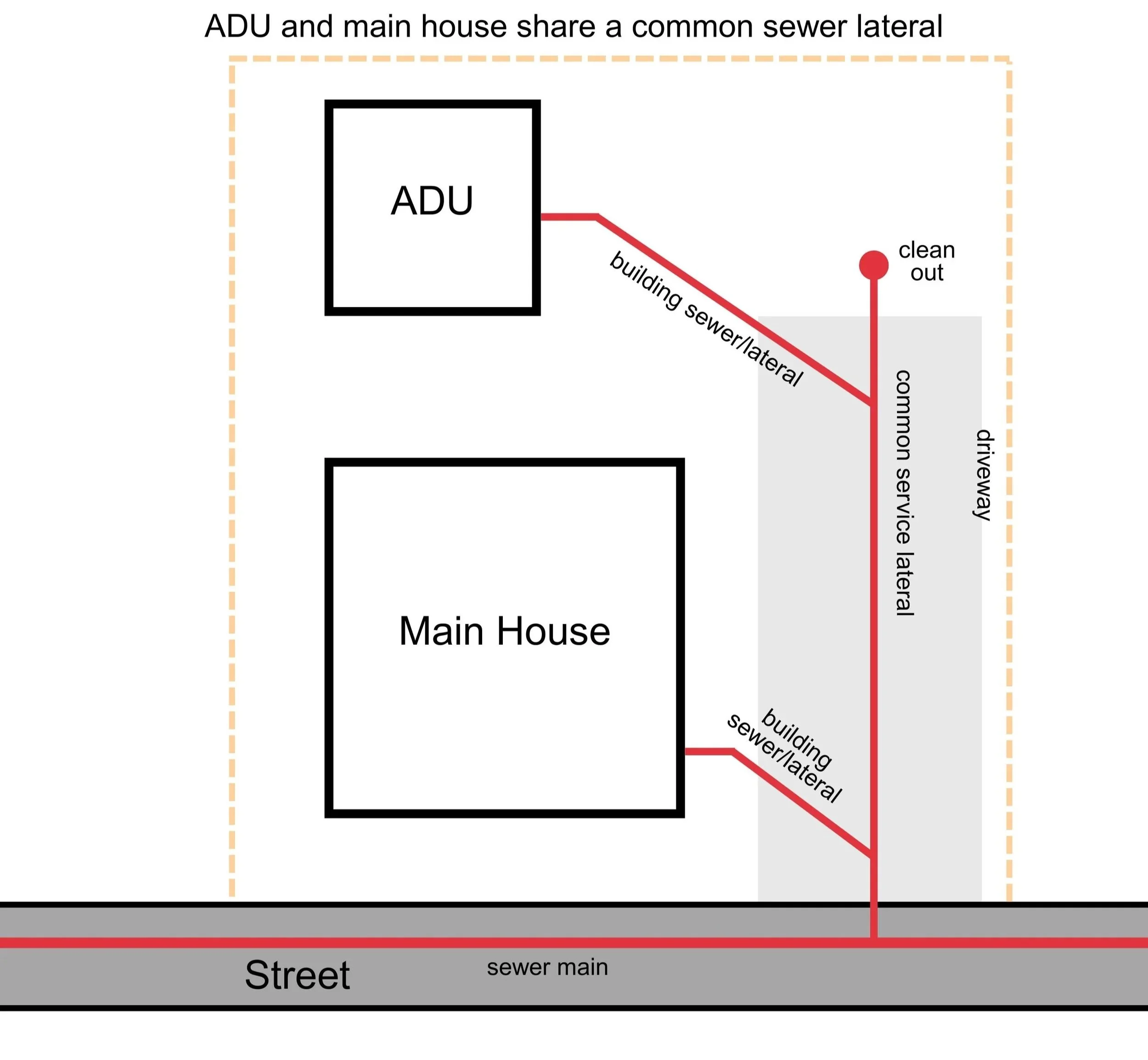
Source: Greater ohio policy center
Figure 3. Another allowable ADU sewer configuration in Columbus
In the second scenario, the ADU and the primary dwelling unit both have separate sewer laterals, but they meet in the yard at a common service lateral and sewer cleanout. From there, the combined lateral travels to the main sewer in the street. Sharing a common service lateral may allow the ADU to avoid sewer capacity fees.Cost Implications
Conversations with builders and homeowners suggest that the potential cost savings of a direct sewer connection between the ADU and the main house could be significant and may be the difference between a financially feasible and an infeasible ADU project. Early data suggest that the cost of a direct connection, like those employed in peer cities, could be as little as $5,000. At the same time, scenarios with independent laterals that tear up the driveway are estimated to cost $40,000 to $60,000.For scenarios with a common service lateral, the price can decrease to around $20K for projects where a driveway doesn't need to be torn up, and sewer capacity fees are waived by the city.Reasons Why Columbus Doesn’t Allow a Direct Sewer Connection
City of Columbus Public Utilities staff reported that a direct sewer connection between the ADU and the main house is impermissible because they interpret the Ohio Plumbing Code and City Code as directing: 1) each building intended for habitation needs a sewer lateral; and 2) a sewer lateral must connect to a common service lateral or the main; these are not the case in the direct connection scenario used in peer cities.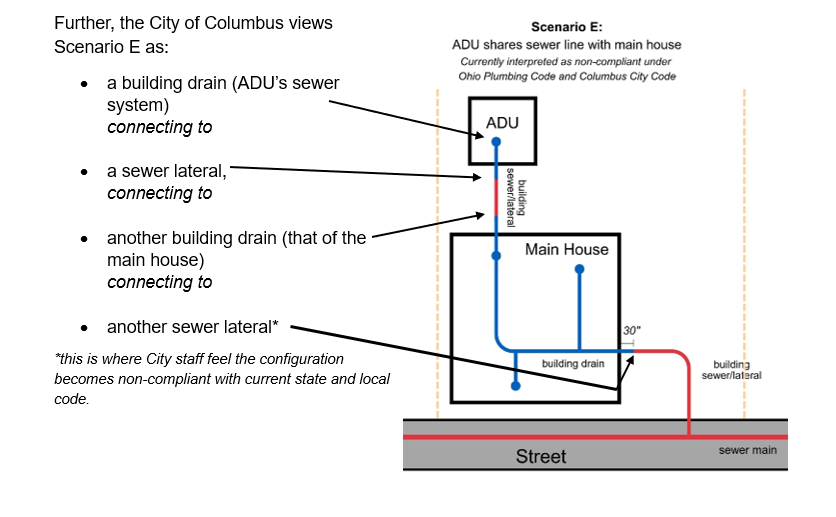
Applicability to Other Places
This report focused on Columbus as a representative Midwestern city. While GOPC didn’t review the plumbing and building code of every single city in the greater Midwest, a scan of other Ohio cities shows code language that is similar to Columbus.’”Conclusion
Adjusting City codes to allow ADU sewers to tie into the primary dwelling unit could help increase the financial feasibility of ADU construction in Columbus. This regulatory change will help maximize the impact of the commendable zoning reform efforts already underway. It could also support the City’s goals of increasing housing and is well-supported by ample national precedent in peer cities.ERICA SPAID PATRAS IS THE DIRECTOR OF RESEARCH AT GREATER OHIO POLICY CENTER. Erica holds a Master of City Planning from the University of California, Berkeley, and a B.A. from Macalester College in St. Paul, MN. At GOPC, Erica conducts research to identify realistic strategies for the redevelopment of Ohio’s small legacy cities, with a particular focus on equitable development in weak-market contexts. While at GOPC, Erica has also researched strategies for supporting more high-quality transit in Ohio and promoting development around transit stops.