

Density Without Walkability: Highs and lows (but mostly highs) from a weekend in Miami
by aNGIE SCHMITT
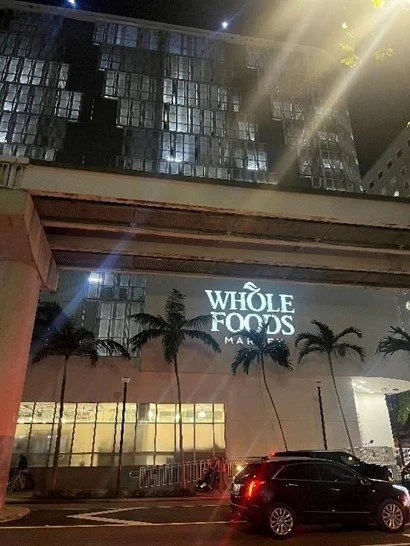
Image credit: ANGIE SCHMIT
I recently visited Miami, where I was in town to visit my sister and speak at the (amazing) Miami Book Fair. We stayed on Brickell Avenue, in a neighborhood full of high rises and chic restaurants. It was a bit surreal, unlike anywhere else I have visited or stayed in the U.S.
Miami — this part especially — is full of towering glass high rises. You don’t see this kind of residential density, especially new construction, very often in the U.S. It reminded me a bit of Toronto or Waikiki, Hawaii, where the massive buildings are mostly hotels.
Unlike Manhattan, central Toronto, or even Waikiki, in Brickell, there was hardly anyone on the sidewalks. It was very strange to walk among these towering residential buildings and see so few people out and about.
Adding residential density alone isn’t enough to create a walkable place – as this neighborhood proves.
In Brickell, I noticed that, even though many of them were wrapped or otherwise disguised, the first five or six floors of every building were parking. Later, I met with an influential local architect and urban designer, and he told me you could walk up to a Metro Mover platform in that part of the city, five stories off the street, and everything surrounding you would be parking.
That photo above, I found funny. Urbanists always dream of having four or five floors of housing over a grocery store. But in Miami, in Brickell, there were five floors of parking over a Whole Foods. It even has a monorail right in front of it. Oof.
Dystopian, from the perspective of those who dream about walkable cities anyway.
Despite all that, it was clear that many things were going right in Miami. I didn’t come away with a negative impression of the city. The city won me over with its overwhelming charm.
One night, we took the Metro Mover to Bayside Park, where a DJ was spinning records. The sun was setting over a marina, and locals - young and old - were having dinner and shopping. They had decorated for Christmas and were celebrating the tree lighting.
Miami seemed to be comfortable with what it is: a different kind of city that operates differently. It’s so international, so tropical, so wealthy, and so showy about it — ha. It has such a recognizable style and flavor.
Miami’s cultural distinctiveness has always been recognized and deftly marketed. From Miami Vice in the ‘70s to the font of today’s Miami Heat jerseys, the script and color are bold and refreshing, with so much personality and so little concern for conformity.
Anyway, it was understandable why people were avoiding walking…
One night, my sister and I tried to walk three-quarters of a mile from one part of the city to another. That was something she said she had never done, even though she lived there for a year and a half, and didn’t even know it was possible. Right in the middle of the city, we found ourselves here:
Despite some dysfunction (transportation and urban-wise), I didn’t get the impression Miami was struggling. Even in Brickell on Saturday night, there were people out, dressed beautifully —especially the women —going to clubs: flashy cars, cruising.
Florida, in my experience, is like that. You’ll find yourself in a lovable little area (generally by the water), and it’s so great. I got to visit the Standard Hotel for a party on Miami Beach. The design of the building and grounds, and the setting, were so charming and posh, so distinctively Floridian, that I was overwhelmed. That part of Florida, I love and always have. You can find those kinds of gems all over the state. But to get there is really a nightmare.
While I was in town, a professional friend of mine — an urban designer and planner — took me on a tour of one of the Crown Jewels of the Miami area: Coral Gables. It was built and designed by a visionary investor during a land development gold rush in Florida in the 1920s.
Coral Gables was laid out with a grid-style street network, which helps it avoid some of the nightmare suburban arterial gridlock that characterizes so much of Florida. The city and its founders were also big believers in street trees. (“90% of urban design is street trees,” said my friend.) The streets of Coral Gables were lined with beautiful, mature banyan trees and live oaks. My friend, the architect Victor Dover, told me Coral Gables employs three forestry crews.
Coral Gables is laid out with important civic spaces - like churches, schools, commercial corridors, pools, and hotels - dispersed throughout the city. Certain parts of Coral Gables were modeled after European landmarks and villages, including this tiny road that was designed to look like a French village.
Victor explained that this street was an inspiration for Andres Duany and Elizabeth Plater-Zyberk, the influential designers who helped found CNU. When they first moved to the area, they lived in the home pictured below, which was at the time less expensive than the newly built homes nearby.
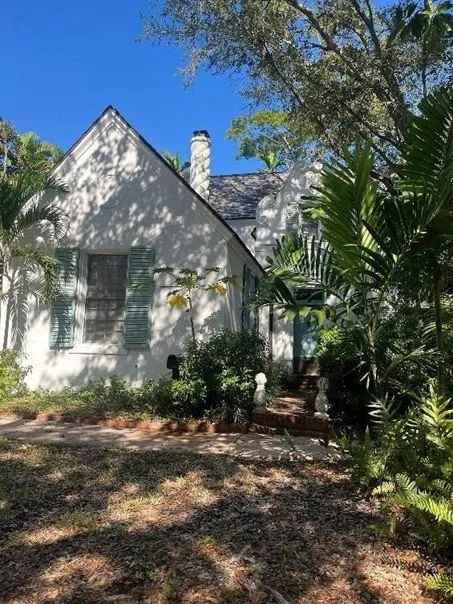
image credit: aNGIE SCHMITT
New Urbanist rogues like Duany and Plater-Zyberk challenged the hegemony of mid-century sprawl at the time, particularly in the Sunbelt region. Victor told me they were inspired by this tiny “French Village", where property values were extremely high compared to surrounding properties. The realization they had, he said, was that people would accept higher density if the design were good. Coral Gables still had a lot of parking, like Brickell. That’s going to be unavoidable, I guess, in a region with such bad transit and walking conditions as Miami. BUT its street life continues to evolve. Here is a street in Coral Gables that was converted to car-free use before the pandemic and is now a bustling restaurant row. 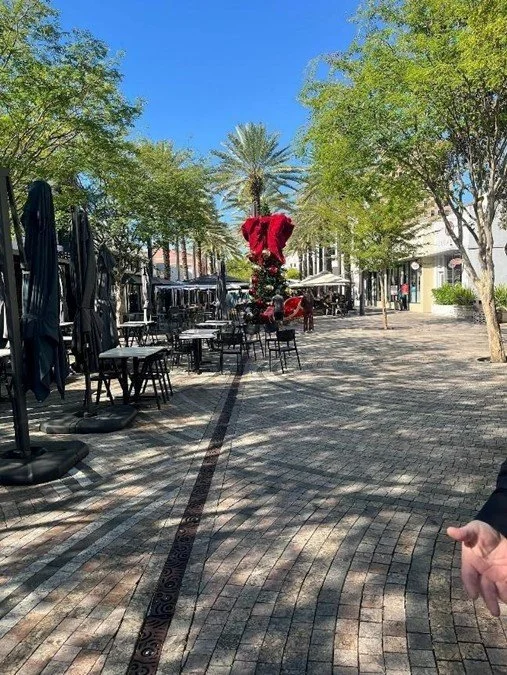
IMAGE CREDIT: ANGIE SCHMITT
Victor is still involved with helping build tiny walkable pockets throughout Florida and the Southeast that, like Coral Gables, tend to be very beloved. I have always had a special admiration for people doing this kind of work in the Sun Belt, where it can be so difficult and yet, due to population growth, there is so much opportunity to do better. Anyway, I was so grateful to be invited to Miami. It’s really an amazing city, I would recommend more people visit.Author Bio:
Angie Schmitt is a Cleveland-based writer and urban planner. She is the author of Right of Way: Race, Class and the Silent Epidemic of Pedestrian Deaths in America, which was published in 2020 by Island Press and named one of the top urban planning books of 2020. She is the founder of 3MPH Planning and Consulting, which works with leading change-makers around the country to advance safer policies and infrastructure. Her writing has appeared in Slate, Vox, The New York Times, CNN Business, and other publications. She is a mother of two and hasn’t owned her own car in nearly a decade.