
Preserving Chicago’s Greater Union Baptist Church
Source: tHOMAS M. dIETZ
by THOMAS M. DIETZ
OCTOBER 2026
Rife with new construction and deeply proud of its architectural legacy, Chicago is a city of perpetual urban improvement.  Recently, the city has drawn national press for several proposed mega-developments.  Targeting diverse neighborhoods, the Bronzeville Lakefront, the Lincoln Yards development in the North Branch of the Chicago River, and The 78 community north of Chinatown are among the most significant and highest-profile real estate development proposals slated for the coming years.  Driven by the specific imperatives of private land developers, these proposals offer transformative visions, promising vibrant mixed-use neighborhoods anchored by entertainment venues.

Critics rightly question if these are genuinely noble efforts at community betterment or merely calculated land grabs designed to extract public subsidies for the highly profitable urban entertainment sector; nonetheless, while securing private profit from the city's entertainment landscape figures prominently in each proposed development, such projects necessarily occur in relatively deflated regions where available land is plentiful, and intervention is widely welcomed.

One key concern in the evaluation of real estate developments is the approach developers hold toward historic urban assets within the footprint of their proposed projects, and a fourth mega-development proposal - the 1901 Project - offers one of the strongest opportunities to articulate a development philosophy for legacy assets. 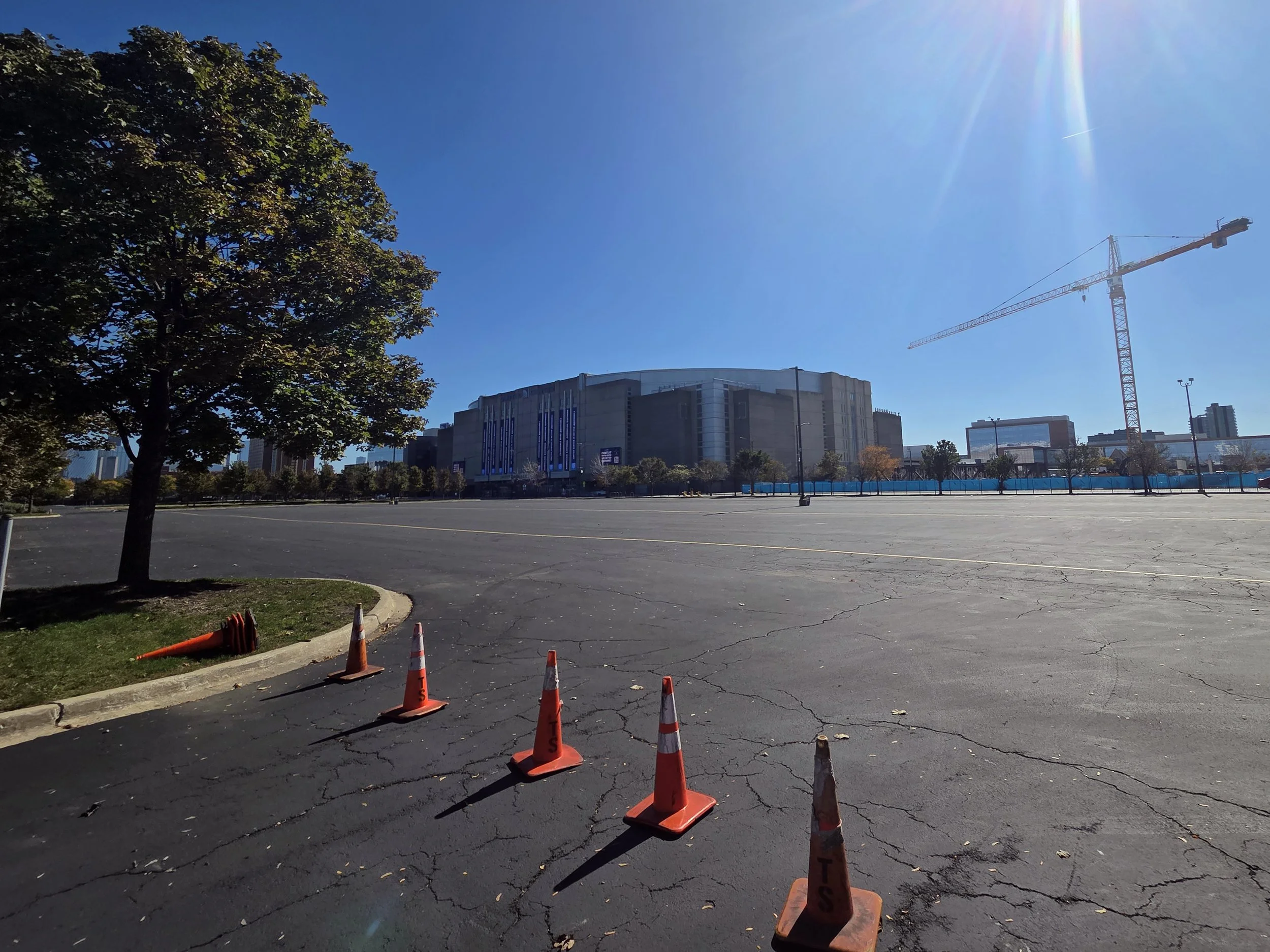
SOURCE: THOMAS M. DIETZ
The Reinsdorf and Wirtz families, owners of the Chicago Bulls and Blackhawks, respectively, are promoting the 1901 Project through their co-owned United Center Joint Venture (the United Center's ownership entity).  The 1901 Project is a mixed-use development named for the stadium’s West Madison Street address. It is described as a $7 billion, fifteen-year intervention to transform the fifty-five acres of parking surrounding the United Center into a sports-anchored mixed-use neighborhood.  Officially described as a privately funded endeavor, the project has received considerable public subsidization, warranting scrutiny of its public interest.  Of principal concern, under Mayor Brandon Johnson, the project received a twelve-year property tax abatement to support the initial phase, estimated to save the developers $54.7 million through reduced property assessments.

The project received formal approval from the Chicago City Council in February 2025, with the first phase defining core improvements to the district's entertainment focus: a 6,000-seat theater with a hotel, commercial retail space, and parking ramps.  There are also plans to better the neighborhood with less glamorous civic improvements, including adding housing supply, public parks, and access to public transportation.  The project officially broke ground on June 3, 2026.  When the housing phase is finally executed, twenty percent of the housing stock will be designated for affordable housing, and there are also targets for minority-owned and women-owned business participation in the commercial areas, along with a stated desire to improve public transit by adding a new CTA Pink Line station (likely to be financed by the City).  Another community partnership with Malcom X College, the 1901 Community Implementation Committee, offers training sessions to help residents secure roles in construction and management, a key component of the project’s minority-owned business imperative.  These policy approaches are sensible, leveraging potential public revenue streams, tax benefits, and city-funded infrastructure improvements; however, a significant historic asset within the development’s footprint also deserves consideration and treatment.

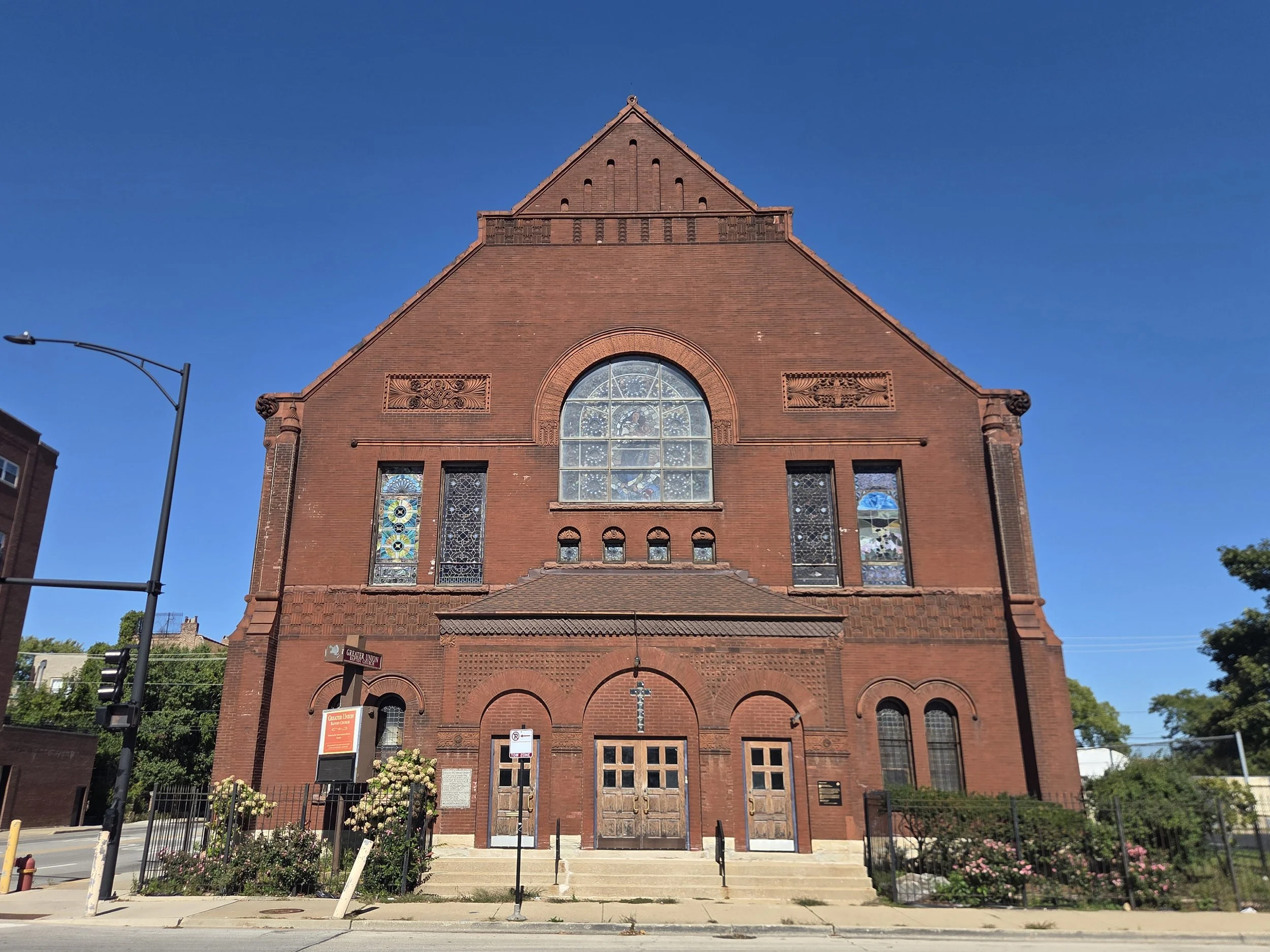
Several houses of worship orbit the 1901 Project, including West Side Community Church, Gospel Temple Missionary Baptist Church, Pilgrim Rest Missionary Baptist Church, and First Baptist Congregational Church.  Prominently among them is the Greater Union Baptist Church.  Writing in the Chicago Sun-Times, Chicago’s architectural critic Lee Bey first drew widespread public attention to the dilapidated Greater Union Baptist Church at the north edge of the site, which ceased operations in 2022 because of deferred maintenance and failed mechanical systems.  The Richardsonian Romanesque building is historically significant, having been designed by the "father of the skyscraper,” William Le Baron Jenney.  It is one of three remaining churches by the architect.  It is therefore a recognized Chicago Landmark, and both Preservation Chicago and Landmarks Illinois have worked to maintain the building’s status, including helping the diminutive congregation of forty secure an Adopt-a-Landmark grant and emergency funding to stabilize the building's exterior masonry.  As a key urban asset, a growing campaign is seeking to divert funds from the larger 1901 Project development to help restore the church.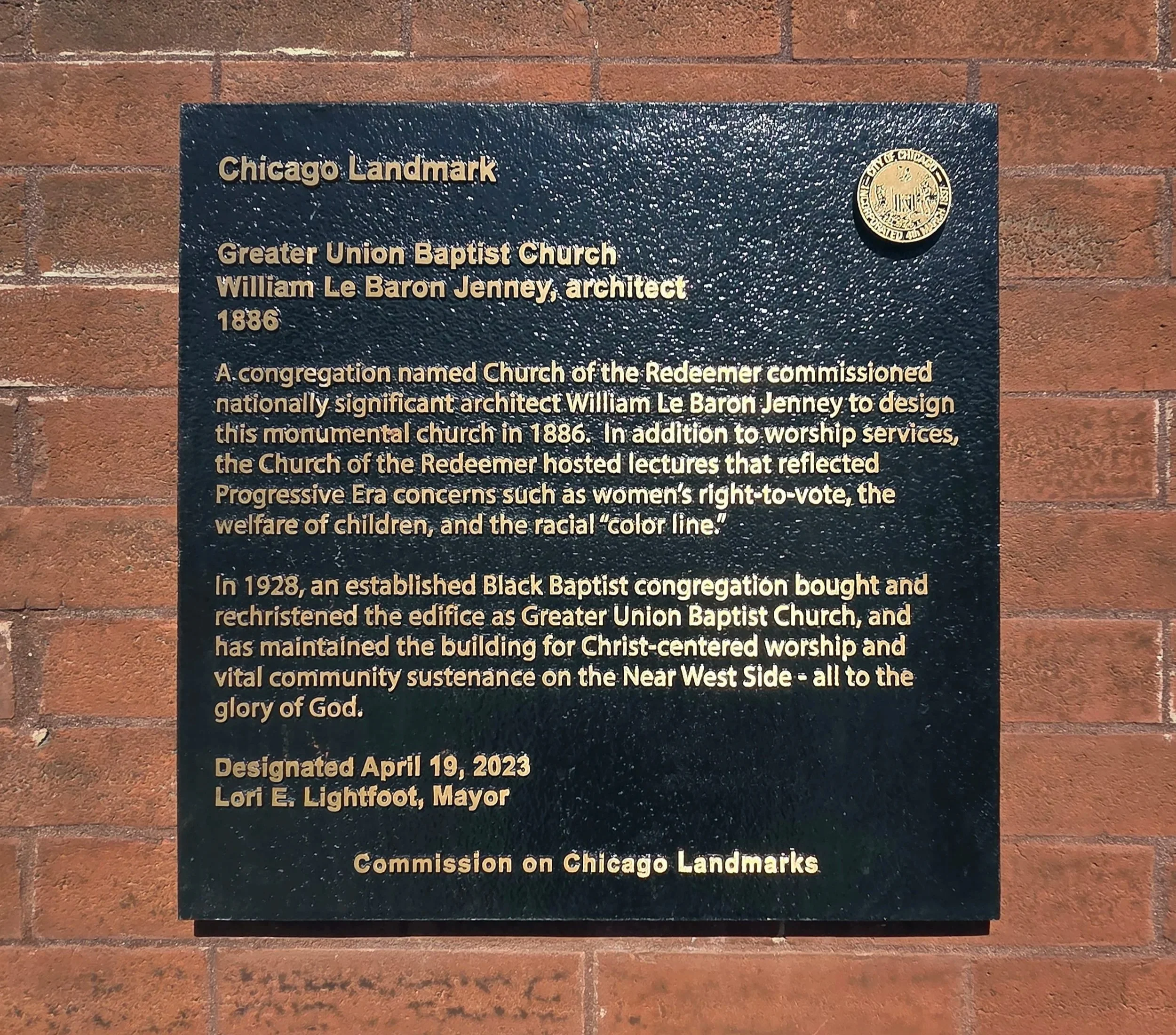
SOURCE: THOMAS M. DIETZ
The aims of the 1901 Project are broadly laudable amidst a sea of largely unused private parking, and the opportunity to improve a core region of Chicago through urban infill, establishing a new neighborhood that champions walkability and access to public transit, is commendable.  However, this case study also offers an opportunity to reflect on how historic assets provide the foundational character and human-scaled design that preserves our collective experience of city life.  Old buildings give neighborhoods a distinct identity and a sense of shared history.  Related, preserving historic structures is a key tool in preventing modern developments from feeling sterile.  In the case of the 1901 Project, the potential benefits of preserving this historic church will likely prove even more relevant, given the inevitably homogeneous character of the new, whole-cloth construction likely to populate the area.  Finally, preserving historic architecture provides an authentic connection among longtime residents through a tangible local heritage that – in this case – directly ties into the city of Chicago’s broader architectural legacy.

As advocates of urban infill and improved cities, proponents of New Urbanism should look forward with optimism to this project and similar developments as hopeful signs of improving attitudes toward density and placemaking.  Likewise, as advocates of history and local identity, we should hope this example proves to be a positive case study of the potential for architectural preservation to serve as a model for future similar developments.
THOMAS DIETZ IS A CNU MIDWEST BOARD MEMBER AND a design architect with the office of David Kuhlman. Professionally educated at the University of Notre Dame School of Architecture, with further graduate studies in architecture principally conducted under Renaissance historians at the Massachusetts Institute of Technology, notably as Henry A. Millon’s last student. Additional studies in the humanities were completed at the University of Chicago Graham School, and in business through the Quantic School of Business and Technology. Architectural internships executed under the design directorship of Duncan G. Stroik, Mary Kay Lanzillotta of the Washington-based partnership of George E. Hartman and Warren J. Cox, and 2013 Richard H. Driehaus Prize laureate and former Yale School of Architecture Dean Thomas H. Beeby.